 I mentioned in my panda rant post the first reason for pandas being useless is their colouring, I also mentioned that there was reasoning to zebras being black and white. Each zebra’s stripes are unique like human fingerprints. When the all the zebras stand close together in a dazzle together they sort of create an optical illusion, they blend together so it’s hard for predator to target an individual. It doesn’t quite make them look like one giant zebra but it does make it hard to tell where one zebra ends and the next begins. When a female gives birth to her foal she will keep it very close to her side so that the foal blends in with the mother and becomes less conspicuous.
Sunday, 21 March 2010
Zebras as promised!!
I mentioned in my panda rant post the first reason for pandas being useless is their colouring, I also mentioned that there was reasoning to zebras being black and white. Each zebra’s stripes are unique like human fingerprints. When the all the zebras stand close together in a dazzle together they sort of create an optical illusion, they blend together so it’s hard for predator to target an individual. It doesn’t quite make them look like one giant zebra but it does make it hard to tell where one zebra ends and the next begins. When a female gives birth to her foal she will keep it very close to her side so that the foal blends in with the mother and becomes less conspicuous.

The panda rant!!
Pandas have sort of become the symbol of animal conservation but they really shouldn’t be. This post is about what we called at college “the panda rant” that one of my teachers (Helen Willmetts-smith) gave to every class she taught. It explains why pandas are responsible for their endangered status; basically it’s about how shit giant pandas are and why they should be left to die out.
- They’re black and white, not exactly camouflage (and before you argue zebras are black and white they use their stripes as a sort of optical illusion that I will explain another day).
- They mark their territory by standing upside down and peeing up a tree, not the best position for a black and white animal!!
- They have a digestive system designed for meat but eat only bamboo, which is the probably one of hardest substance to digest in the world, they have to be eating for around 18 hours a day just to maintain their body weight. This is why they were originally not categorised as a bear because they didn’t appear to be carnivores but they should be.
- Naturally bamboo dies out then regenerates but this takes some time so naturally their food source will run out for a while.
- They don’t know how to have sex; pandas in a zoo in china actually had no idea how to copulate so they basically put on a video of pandas having sex to encourage them.
- They don’t have enough energy to support a foetus properly s they’re born extremely premature (normally at around only 95 days) and for the most part don’t survive. Also if they give birth to twins they WILL abandon one of them because they know they can’t support it!!
- When conservationist tried to release captive bread pandas into the wild the native pandas killed them, so they’re too lazy to hunt but not too lazy to kill their own species??
- They don’t become sexually mature until 20 years of age.
- The female ins only in heat for 2-3 days a year, not helpful when you’re a solitary creatures and need to find each other, impress the female and mate in that tiny space of time!!
So all in all they aren’t doing themselves any favours. Yes we’re not helping with pollution and deforestation but personally I feel our conservation efforts should be concentrated on a species that actually has a chance!!
So next time you feel emotionally manipulated by the WWFs adverts showing pandas just remember this or better yet think of the polar bears and other species that do everything they can to survive but thanks entirely to us they're dying out just as fast!!

Baby animals!!
Once again I’ve been thinking about all the ways animals are totally different and my favourite is in how they reproduce! That sounds a bit weird but when it comes to things like gestation animals do some totally strange stuff!! Plus we all know that baby animals are the cutest things in the world!
I’m going to start with one I found really fascinating when I first learnt about it. I am talking about the kangaroo. Did you know that kangaroos sort of have 2 uteruses and 2 penises? Yes it’s true. This allows the male to fertilise 2 eggs at one. One egg then begins to develop whilst the other’s development is halted and they remain in the uterus until the first joey is out of the pouch. Now back to the other fertilised egg, this develops into a neonate (also called a foetus) and is born at just 33 days. The offspring is only a few centimetres long, hairless, blind and has only stumps for hind legs. This miniscule creature then has to climb up its mother’s belly and into her pouch. The mother normally helps by licking a pathway through her fur for it to climb up. This takes about five minutes, but it must seem like forever to that tiny creature. The baby then attaches itself to a nipple and stays attached for the next 190 days and develops into a joey. To begin with it’ll only stick it’s head out to have a look around but when it feels safe enough it will get out periodically but return to the pouch. Eventually after about 235 days it leave the pouch all together and the mother can then allow the second embryo to develop. To be honest I thought this was a pretty efficient way of doing things!!
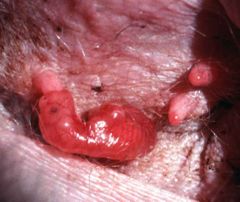 Next I just want to say a little something about snake reproduction. Like a lot of animals they are seasonal breeders but they will only become sexually recipient if environmental conditions are correct. In pet trade the breeders will begin to reduce the temperature, light period and food intake to bring them into what is called brumation (like being in heat with dogs). Now you all know it’s very hard to tell what gender a snake is just by looking as they have entirely internal reproductive organs, the only way to be sure is have a vet probe them.

Now I just thought I’d give you some lengths of gestation periods, as you’ll guess the bigger the animal the longer the gestation but some of these will surprise you:
- Domestic mouse is 19 days.
- Rabbit is 30-35 days.
- Guinea pig is 68 days.
- Chinchilla is 110-120 days.
- Puma (a type of big cat) is only 90 days.
- Horse is 330-342 days.
- Giraffe is 420-450 days.
- Polar bear is 240 days.
- Elephant is 645 days (that’s nearing 2 years!!).
- And humans are 254-294 days.
This post is also an excuse to post my favourite picture at the moment, which is of my friend’s 4 month old daughter who is just lovely!!

Tuesday, 16 March 2010
Eyes.
I’ve been thinking about different adaptations that animals have and one common example of adapted feature can be seen in the eyes of different species.

Here is a picture of my snake fast asleep!! Yes she’s asleep even though her eyes are wide open. This is because snakes actually have no eyelids (as do fish). They have a layer of skin protecting their eyes. If you ever see the sloughed skin of a snake you will notice they shed every inch, including their eyes. In fact if you keep snakes it’s very important to check that they have shed their eyes properly as it can make sight difficult.

This is a picture of a vulture with it’s eye open, however you may notice it appears to have it’s eye half closed, vertically. This is called the nictitating membrane; many animals have it (including cats, frogs and sharks) but most commonly are birds of prey. The nictitating membrane is a semi-transparent (see through) second set of eyelids that cover the eyes while the bird is in fight. This prevents debris from getting in their eye but still allows they to see.

This is a picture of a camels eye. They don’t have unusual eyelids but have extra long eyelashes. This helps protect their eyes from sand being blown into it and causing them discomfort.

Now this is a picture of a gecko licking it’s own eyeball. And you thought it was impressive to be able to lick the end of your nose? Geckos, like snakes and fish, have no eyelids so they lick their eyes to keep them moist and clean.
Grey Heron
 Ok so I haven't written anything on here in about 6 months, I've had very little motivation!! But I was prompted today when I saw a heron flying across the back fields for the first time this year so I thought I'd say something about them. I see them quite often round here but as we've had a particularly cold winter there haven't been any in months.
The grey Heron is native to most of Europe, Asia and even parts of Norther Africa, however during the summer months they can be seen as far north as the Norwegan coast and the Arctic circle. They're very common wadding birds and most of you will have seen them around if you've been to lakes or marsh land.
They stand at about a meter tall so they're easily spotted. they have a wing span of almost 2 meters. They're easy to identify when flying as they have a slow flapping motion unlike other large birds that tend to glide. You can also see their long neck is curled back in a sort of "S" shape.
For the most part they live on fish and frogs, caught out of the water with their long bill. However they will sometimes take small mammals, reptiles, and ducklings.
Sometimes people tell you to put a plastic heron next to your pond to discourage real herons from eating your fish, but to be honest it doesn't really work and neither does putting netting over your pond. My best advice would be not to keep fish in your pond at all!!
Thursday, 27 August 2009
Yellow anacondas.
I've decided to write about yellow anacondas because I want one!! Unfortunately I'm not aloud one, partly because I don't have the money and partly because I'm 18 and thus still live at home and am burdened with the rules of my mother. So I'll just have to write about them instead.
Now when people normally talk about anacondas you think of a green anaconda, which are the second largest species of snake (after the reticulated python) and can grow as large as 30 feet. They are also one of the only snakes that can actually eat you! yes snakes have to be 30 feet long before they can even eat a small person (so nothing to worry about when you meet burmese pythons and things they won't bother attacking you as they know they can't eat you). They need to this big because otherwise they would choke on your shudders, remember that they swallow their prey whole so can't bite bits off.
But enough about green anacondas I'm personally more interested in yellow anacondas or a Paraguaya anaconda. Although they don't get to 30 feet they are still fairly big and can reach as much as 15 feet (but that's rare) and they average at about 10 feet. Like green ones they are also found in South America and are semi aquatic, meaning they don't live in water but they like to swim, which is a jolly good reason no to go swimming in rivers in South America!! They can be found in swamp, marshes and on river banks.
In captivity anacondas are known for being fairly bad tempered, unpredictable, and can bite very easily, so are only kept by experienced and trained keepers (like me!! :)).
Incidentally they are a red listed species (meaning they are endangered) and are classified as 'vulnerable'. As a result of this they are protected by CITES (which is a Certificate for the International Trade of Endangered Species of wild flora and forna and is used to keep track of endangered species in captivity), so if you own a wild captured one (which I don't support) then you need documentation for them, without it the animal will be confiscated. However captive breed animals don't need them and can be bought for around £175 but they're hard to come by.
Now you may be asking why the hell I want one. Well that's simple, I like the slightly unusual pets. The less well known species of animal. And the more dangerous the better!!
And yes I know I'm mental!

Saturday, 15 August 2009
Woburn safari park. Squirrel monkey enclosure.
On the whole I was really really impressed with all of Woburn safari park. There wasn't a single enclosure I didn't like. I loved the lion enclosure which was several acres large and you actually have to search for the lions, it was almost as big as their natural territory size. The lions were the biggest enclosures by far but all of them were massive, all of which had lots of natural trees and bushes. I didn't notice the wolves wandering free around the same enclosure as the bears until they cam loping around the bushes for feeding time.
But my favorite was the squirrel monkey enclosure which was walk through. It was large and open with no roof, but well designed over hanging mesh sides to keep them in. This is a technique that's normally used to make the visitors feel better about the enclosure, it gives a more open feeling. But in this case this allowed the safari park to have naturally growing trees in the enclosure. It was brilliant, they were large and very good for the monkeys to climb. They also had little structures to climb on and ropes for them to walk along.

They also had access to an indoor area that was entered through half a dozen tubes, to get into it there were little flappy doors that the monkeys could open. I also loved that they had about 3 mothers with young infants clinging to their backs. it is probably the best enclosure i've seen in a while!!

Subscribe to:
Posts (Atom)