Sunday, 28 June 2009

15 Steps to giving a cat a pill!

I must begin by saying that this is not my own work, I have copied this from Awkward's Humor and Sillies.

1. Pick up cat and cradle it in the crook of your left arm as if holding a baby. Position right forefinger and thumb on either side of cat's mouth and apply gentle pressure to cheeks while holding pill in right hand. As cat opens mouth pop pill into mouth. Allow cat to close mouth and swallow.

2. Retrieve pill from floor and cat from behind sofa. Cradle cat in left arm and repeat process.

3. Retrieve cat from bedroom and throw soggy pill away.

4. Take new pill from foil wrap, cradle cat in left arm holding rear paws tightly with left hand. Force jaws open and push pill to back of mouth with right forefinger. Hold mouth shut for a count of 10.

5. Retrieve pill from goldfish bowl and cat from top of wardrobe. Call spouse from garden.

6. Kneel on floor with cat wedged firmly between knees, hold front and rear paws. Ignore low growls emitted by cat. Get spouse to hold head firmly with one hand while forcing wooden ruler into mouth. Drop pill down ruler and rub cat's throat vigorously.

7. Retrieve cat from curtain rail, get another pill from foil wrap. Make note to buy new ruler and repair curtains. Carefully sweep shattered figurines and vases from hearth and set to one side for glueing later.

8. Wrap cat in large towel and get spouse to lie on cat with head just visible from below armpit. Put pill in end of drinking straw, force mouth open with pencil and blow down drinking straw.

9. Check label to make sure pill not harmful to humans, drink glass of water to take taste away. Apply Band Aid to spouse's forearm and remove blood from carpet with cold water and soap.

10. Retrieve cat from neighbour's shed. Get another pill. Place cat in cupboard and close door onto neck to leave head showing. Force mouth open with dessert spoon. Flick pill down throat with elastic band.

11. Fetch screwdriver from garage and put cupboard door back on hinges. Apply cold compress to cheek and check records for date of last tetanus jab. Throw away T-shirt and fetch new one from bedroom.

12. Ring Fire Brigade to retrieve cat from tree across road. Apologise to neighbour who crashed into fence while swerving to miss cat. Take last pill from foil wrap.

13. Tie cat's front paws to rear paws with garden twine and bind tightly to leg of dining table. Find heavy duty pruning gloves from shed. Push pill into mouth followed by large piece of fillet steak. Hold head vertically and pour 2 pints of water down throat to wash pill down.

14. Get spouse to drive you to Casualty, sit quietly while doctor stitches finger and forearm and removes remnants of pill from right eye. Call furniture shop on way home to order new table.

15. Call RSPCA to collect devil cat and ring pet shop to see if they have any nice hamsters.


Monday, 15 June 2009

Animal collective nouns.

Did you know that almost every animal in the world has a different word for a group of them? (excluding animals that are solitary)
There's the ones everyone knows:
  • A colony of ants
  • A herd of deer
  • A troop of gorillas
  • A cete of badgers
  • A swarm of bees
  • A pack of dogs
  • A gaggle of geese
  • A pride of lions
  • A parliament of owls
Some that you might not know:
  • A bask of crocodiles
  • A sleuth of bears
  • A rabble of butterfly
  • A clutter of cats
  • A coalition of cheaters
  • A leap of leopards
  • A business of ferrets
  • An intrusion of cockroaches
  • A piteousness of doves
  • A charm of humming birds
  • An aerie of hawks
  • A siege of herons
  • A bloat of hippopotamus
  • A murder of crows
  • A mischief of mice
  • A yoke of oxen
  • An ostentation of peacocks
  • A trace of rabbits
  • A crash of rhinos
  • A shiver of sharks
  • A bale of turtles
  • A decent of woodpeckers
  • A tower of giraffes
  • A dray of squirrels
  • An unkindness of ravens
  • A gaze of raccoons
  • A parcel of penguins
  • An exhalation of lark
  • A quiver of cobra
And my personal favorites:
  • A dazzle of zebra
  • An implausibility of gnu
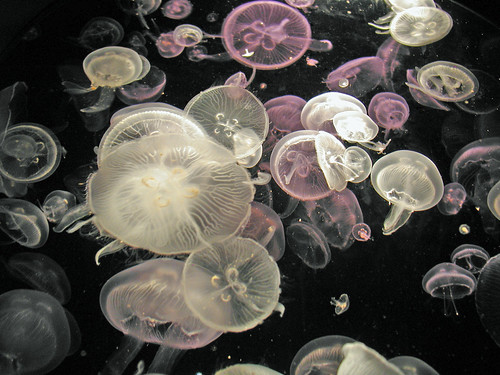
  • A smack of jellyfish

Sunday, 7 June 2009

why not become a veterinary surgeon?

I’m going to tell you why not. To do this I’m going to tell you a little story (well not very little). I might note now that this is completely fabricated, none of the characters exist and none of these exact things have happened. But it is based on truth!

The story starts with 14 year old Elizabeth Jones from Cornwall, let’s call her Liz. She loves animals. She’s in year 9 and thinking about her GCSE options, so one day they have a careers day to help them decide and there’s a vet there. So obviously she talks to this vet and decides then and there that she wants to be a vet as well. She picks her GCSEs (which include all the sciences and statistics), now Liz isn’t a clinical genius but she’s fairly smart. Over the next 2 year Liz works very hard, forfeiting her social life in favour of the A*s that she needs. She’s been to about 4 parties the whole time but come results days she’s got her A*s (except for textiles which she has a B but that doesn’t matter).

Next she goes on to do her AS levels in which she has to take biology, chemistry, physics, maths and further maths. Again she needs A*s so for another year for forgoes a social life. But again when results day roles around she’s got her A*s. so Liz goes on to do biology, chemistry, physics and maths at A2 level. Now she starts A2 in September but she needs to have her UCAS application and personal statement in by the needs of October if she wants to get into Veterinary college. Yet another year goes by where she has no social life. But come results day none of that matters because she’s got her A*s and she’s got into veterinary college. It’s all good!

So she’s off to the Royal Veterinary College in London. Obviously she can’t live at home so she moves out and gets a student loan. She’s going to spend 4 years in undergraduate college and 4 years studying veterinary medicine. So that’s 8 years of university in which she has to work her little socks of because a veterinary science degree is the hardest course you can do (yes harder than becoming a doctor). Again Liz has very little social life because of her work load but she does manage to get herself a nice boyfriend called Jack, he’s a business student. Now after 8 long gruelling years of hard work she finally graduates with a first in Veterinary Science. She’s about £100,000 in debt but she’s a vet at last. It’s all good!

So Liz and Jack get married, move to Yorkshire and buy a nice little cottage in a quaint little village. Jack goes off to work in some big corporation while Liz takes up a job at the local vet practise and becomes best friend with the qualified vet nurse, Anna. The practise is open from 8.30am to 7pm, 7 days a week. Liz works 9 hours a day, 6 days a week. But because she lives 2 minutes from the practise she’s also on call 24/7.

One night Liz gets a call at 3am saying that Mrs David’s pedigree poodle has gone into labour but there are complications and she’s needed. But by the time she gets there she can only save the mother but not the puppies, there was a blockage and all the puppies suffocated. She gets the puppies out, sews the mum back up, charges Mrs David £300 for the call out and goes back to bed. This is not the first or last time this happens.

It’s a year or so later and Jack wants kid, they’re both 27 and got good jobs so it seems like the right time. But no, how can Liz take maternity leave when sick animals rely on her? Besides she’s virtually infertile due to the stress of long hours and frequent call-outs. So the marriage starts to shake. In the mean time Anna, Liz’s best friend, has discovered that being a vet nurse pays almost nothing for a very stressful job, so she’s quitting to go teach animal care in Gloucester. It’s not all good anymore!

One days old widowed Higginbottom brings in Fluffums, her cat and only companion in the world, he’s been hit by a car and is bleeding internally. Liz takes a look at him and realises the only option is to ‘humanely destroy’ (you’re not aloud to say ‘put down’ anymore) Fluffums. She goes to tell the old widow Higginbottom, the poor old lady is distraught, she begs Liz to try and save her faithful companion, she cries and wails and moans. But Liz knows there is nothing that can be done so she gets the widow to sigh a consent form and ‘humanely destroys’ Fluffums. She then charges the old widow higginbottom £30 for the consultation and £30 for the euthanasia.

Now it’s been over a year since Jack first wanted kids and since then the marriage has careened down hill. Until one day Jack leaves Liz for his secretary, who’s a 23 year old Barbie look-a-like with 3 brain cells but she also has an available uterus and a less demanding job. So Liz is now single, friendless and hundreds of miles from her family, she’s feeling a bit lonely (as well as immensely stressed and tired from work). Nothing is good!

But life in the vet practice goes on. One day the Roncary family bring in Thumper the rabbit. He’s here for a routine operation to remove a tumour, but Debbie and Adam, the adorable little 10 year olds, are worried. Liz assures them “Thumper will be just fine!”. The operation goes well and the tumour is successfully removed; now all they have to do is wait for Thumper to come round from the anaesthetic. But he never does, the most common complication in surgeries is with anaesthetic. Liz now has to go tell the family that their rabbit has sadly died. They’re not happy, the kids ball their eyes out saying: “you promised he’d be ok!!” and the parents want to sew her but of course they signed a consent form so they can’t. She then has to charge them £200 for the surgery.

By this point Liz has very serious depression as a result of her divorce (very expensive divorce I might add) and the stressful and depressing job she has. You’d think with such a well paid job she could afford a great councillor. No! you’re forgetting she’s still massively in debt from university, the divorce and the mortgage on the nice little cottage. The big box of horse tranquilizers at work is looking more and more appealing. Life is terrible!

Until one day after having to destroy a farmer’s entire heard of cattle because of a blue tongue out break, she snaps! She goes home, leaves the door unlocked for someone to find the body and takes 50 horse tranquilizers. Fortunately Mr Brook from next-door came round because he was worried about his Labrador, so has come to ask her about it. He finds her passed out on the floor and calls 999. Liz gets her stomach pumped, is given time of work, find a good therapist and starts dating Mr Brook from next door. So for Elizabeth Jones it’s all good again.…. for now!!

Just to remind you this is totally fabricated. However Veterinary surgeons has the highest rate of suicide out of any other profession (within reason).

I have written this story because I am often asked “why not become a vet?” well that is exactly why. And remember those student loads next time you winge about a vet bill, there is a very good reason why it costs so much to see a vet even for 10 minutes.

Saturday, 6 June 2009

Arsenic.

This post has nothing to do with deadly poisons. I'm talking about my brand new pet snake. He's a jungle jaguar carpet python, now named Arsenic. He's 75% jungle carpet python and 25% jaguar carpet python (which is a colour variation of a coastal carpet python). He's a bit less than 1 1/2 years old at the moment and he's about 2 1/2 feet long.
Now jungle carpet pythons are black with bright yellow patterned (picture) and jaguar carpet pythons are a pale yellow with faded black patter (picture). So when Arsenic is about 2 years old (which is when they reach their true colour) he's be black with sort of faded yellow patterning.
Interestingly a lot of pet shops put carpet pythons down as being very difficult to keep and should only be kept by experience keeper, but I've done some research and talked to thee guy I bought him off and apart from being snappy as juveniles they're not much harder to keep than other pythons.
Just a little bit about them. Carpet pythons are found in the in and around Australia. They become fully grown and sexually mature at about 3 to 4 years old. Fully grown they are between 4 and 7 feet, males normally about 5 feet and females about 6 feet. They eat mice and rats.

I happened to get my lovely python off a breeder in Solihul, near Birmingham. He actually doesn't breed carpet pythons but he does breed royal pythons, corn snakes, leopard geckos and bearded dragons. Website.

Tuesday, 26 May 2009

Giant green sea turtle conservation!

One of the major high light of the trip over all was our visit to Turtle island off the east coast of Sabah. This is one of the nesting sights for giant green sea turtles. They are considered 'threatened' by the IUCN, so there is a big conservation effort going on.
Every single egg laid on the island is collected as they are being laid. It's not hard to collect the eggs because the mother laying the eggs goes into a sort of trance when she is laying, making her oblivious to anything around her. The eggs are then taken to an incubator, this is simply a protected area of sand where they are reburied and marked. The mother is measured and recorded, if she isn't already tagged they tag her. She then returns to the sea completely oblivious to the eggs no longer being in the hole she buried them in and not to return for 2 years. Once the turtles hatch they are released directly into the wild. The night we were there, over 1000 eggs were collected.
HOWEVER a scientist put trackers on 1000 baby turtles and by the time they got to the feeding grounds about 10 years later only 3 were alive, that's 99.97% of all babies die before they reach sexual maturity. This is a common technique for carrying on the species, either animals have few babies and take very good care of them or have lots and hope that a few survive to carry on the species.
Now although we are partly responsible for this huge number of deaths we must remember that the babies are very small, so are easy prey for most large carnivorous sea creatures. But we are still partly responsible. They are killed by:
  • Pollution.
  • Eating plastic bags (their diet is mainly jelly fish so an easy mistake).
  • Trapped in fishing nets.
  • Killed by propeller blades.
  • Hunted for shells and other components.
  • Eggs used in chinese medicine.
So as a result of all of this the turtle laying sights are now so protected there is a military presence on the island (they're also there to stop Philippino illegal immigration). There are also very strict regulations such as; you're not aloud on the beach after sun set and before 6 am and you're not aloud to take photos while on the island but you can buy them.

Oh and 1 other thing, i'm no bunny hugger but, baby turtles are the sweetest little creatures in the world.

Friday, 22 May 2009

5 orang utan encounters.

Throughout my short time in Borneo I had 5 different meetings with 5 different orang utans in 5 totally different situations. Orang utan is Malay for man of the forest and is technically 2 words (so don't tell me I'm spelling it wrong).

The first meeting was probably the best. While on the river cruise through the rain forest we saw a completely wild female orang utan in a tree by the river side. It was truly amazing to see such a beautiful animal, so carefree and natural. She didn't mind us watching her one bit and just watched us back. We spent a good half an hour just watching her swing about in this tree before leaving her alone.
The second was in the Sepilock orang utan sanctuary. Although we didn't see much of the orang utans we didn't mind as the sanctuary does so much for conservation. Their purpose is to rescue orphaned or injured orang utans. They then hand raise the animals and slowly release them into a protected area of rainforest around the sanctuary. They will put out food on platforms for the orang utans to come back to and feed from if they want but they become effectively wild. Some orang utans come back for all of their lives and some are never seen again. These orang utans become completely wild again and form their own natural society, they now have a 3rd generation of wild orang utans around the sanctuary. The sanctuary has even released some orang utans back into the class 1 rainforest (untouched by humans).
Our third was at the zoo. Although other enclosures in the zoo where horrible, I was impressed with their orang utan enclosure. It was well spaced, had good enrichments and was well maintained.
The forth encounter was with a semi wild orang utan near the hot springs we visited. The hot springs are on the edge of Kinabalu park which is a huge area around mount Kinabalu, which is totally protected rainforest. This orang utan lived on the edge of the park and was occasionally fed by park rangers when food was scares. However it became familiar with humans and is now fed a lot by tourists (that's why he's a bit fat). So although he's technically wild he was partly domesticated.
The final meeting we had was a completely domesticated orang utan that we had come to the resort for us to see. Although we weren't aloud to touch her (named girl) we were aloud to we close to her and watch her play in the tee. It was very strange to see a combination of orang utan behavior and copied human behavior. Some people might think it's wrong to have her like this but now that she is domesticated there is no point trying to release her and the money she raises by visiting tourists like this goes to conservation of her natural habitat (this is the same principal behind zoos).

Over all I found it interesting to see the behavioral and even physical differences between the 5 orang utans. If you look carefully at the pictures you will see the more wild orang utans are more of a dark reddy-orange colour opposed to the captive ones which are a light orange colour. Out of all of them my favorite will always be the wild orang utan.


Ring tailed lemur enclosure!

While I was in Borneo we visited a local zoo. We were all prepared for poor enrichments and enclosures as the animal welfare laws in Malaysia are virtually none existent.
Now you all know now much I love ring tailed lemurs. So, even though I was prepared for it, their enclosure in this zoo still shocked me. Some enclosures we saw were quite good, almost as good as british zoos. But this was the most horrific thing I have ever seen.
This enclosure contained 2 lemurs. The enclosure consisted of a box that was about 10 feet by 10 feet by 10 feet. There were a couple of branches in it for them to climb on. And that was it!!!
While I was stood there I watched one of them walk round and round and round on the branches in the enclosure. This is what is called "stereotypical behavior". This type of behavior is seen in captive animals that are basically going insane. In British zoos they try to reduce this by giving the animals "behavioral enrichments". This is basically things to do, things like trees to climb on, balls, hiding their food, dragging meat for carnivores to chase. Basically little things that will encourage them to do things they would naturally do in the wild.
Other stereotypical behavior you might see:
  • pacing.
  • rocking/swaying.
  • over grooming.
  • self harm.
  • calling.